Objects of Desire
Glass sails, a concrete ring and five floors that move
Gehry’s glass sails, Ando’s ring in the Bourse and Nouvel’s moving floors at the Palais-Royal.

Photo Credit
Image courtesy of © Jean-Pierre Dalbéra · CC BY 2.0 via Wikimedia CommonsHow does a city as finished as Paris make room for new architecture? By building inside the old, mostly. A glass cloud in the Bois de Boulogne, a concrete cylinder slipped into an eighteenth-century grain market and five moving platforms in a Second Empire department store. No prices, only buildings, checked against their own pages in November 2026.
The cloud in the Bois
Frank Gehry wanted to design “a magnificent vessel symbolising the cultural calling of France”, and the Fondation Louis Vuitton, by the Jardin d’Acclimatation in the Bois de Boulogne, looks ready to sail. Twelve glass sails, made of 3,600 panels each curved to the nearest millimetre, cover 13,500 square metres.
Beneath them sits what the foundation calls the iceberg: 19,000 panels of Ductal, a white fibre-reinforced concrete, every one unique. Inside, 7,000 square metres of usable floor hold 11 galleries and an auditorium of 350 seats, or 1,000 standing. Gehry took his cue from the glass and garden architecture of the late nineteenth century, then built it with tools that century never imagined.
The building sits in a basin made for it, so water doubles the sails. Its setting is old Paris at play: the Jardin d’Acclimatation opened in October 1860, and the young Marcel Proust played there. The Bois de Boulogne around it covers 846 hectares, with 28 km of bridle paths and 15 km of cycle paths, enough to walk off any exhibition.
A circle in the circle
The Bourse de Commerce began as a grain market from 1763 to 1873 and became a commodity exchange from 1889. Its dome carries a frieze of almost 140 metres. The Pinault Collection opened here on 22 May 2021, after Tadao Ando inserted a great concrete cylinder into the 38-metre rotunda.
“I drew a circle in the circle,” Ando said, “magnified by an exemplary restoration of the existing one.” Paris rarely knocks anything down; it prefers to put something astonishing inside it. The museum is open from 11am to 7pm, until 9pm on Fridays, and closed on Tuesdays; on the first Saturday of each month it opens from 5pm to 9pm at no charge.
Floors that move
In October 2025 the Fondation Cartier pour l’art contemporain moved to 2 place du Palais-Royal, a five-storey building of 1854–1855 that housed the Grand Hôtel du Louvre and the Grands Magasins du Louvre for nearly a century. Jean Nouvel redesigned its interior volumes.
Paris rarely knocks anything down; it prefers to put something astonishing inside it.
Five platforms of between 200 and 340 square metres can each be set at different heights, so the galleries rearrange themselves for every show: 8,500 square metres open to the public, 6,500 of them for exhibitions. A department store once moved its stock; this one moves its floors. Nouvel also designed the foundation’s glass-and-steel building on the boulevard Raspail in 1994.
This winter the floors frame Ibrahim Mahama’s “The Harvest Season”, from 22 October 2026 to 28 February 2027. Seeing the building work is half the visit: the same rooms will look different at the next show, which is more than most Paris apartments can say after a century.
Closed for transformation
The newest Paris landmark may turn out to be an old one. The Centre Pompidou has closed for its transformation, which the Centre gives as running from 2025 to 2030; meanwhile its programme travels to partner venues. Until it reopens, the city’s most famous inside-out building is, fittingly, being worked on from the inside.
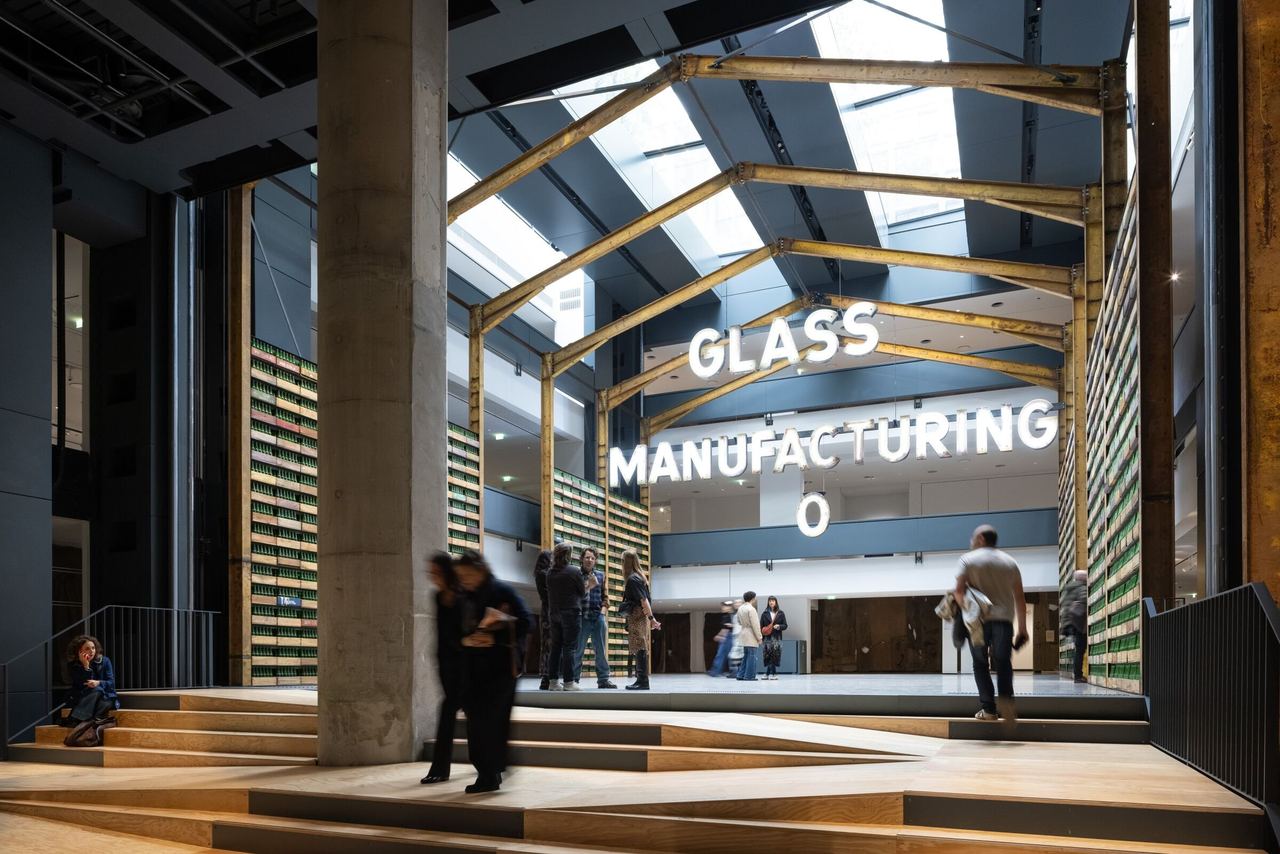
Photo Credit
Image courtesy of © Fondation Cartier pour l’art contemporainOur advice: go to the Fondation Louis Vuitton on a bright morning, when the sails throw their light around; see the Bourse at a Friday late opening, when the rotunda glows; and take the Fondation Cartier slowly, looking up as often as at the art; the floors, after all, may have moved since your last visit.
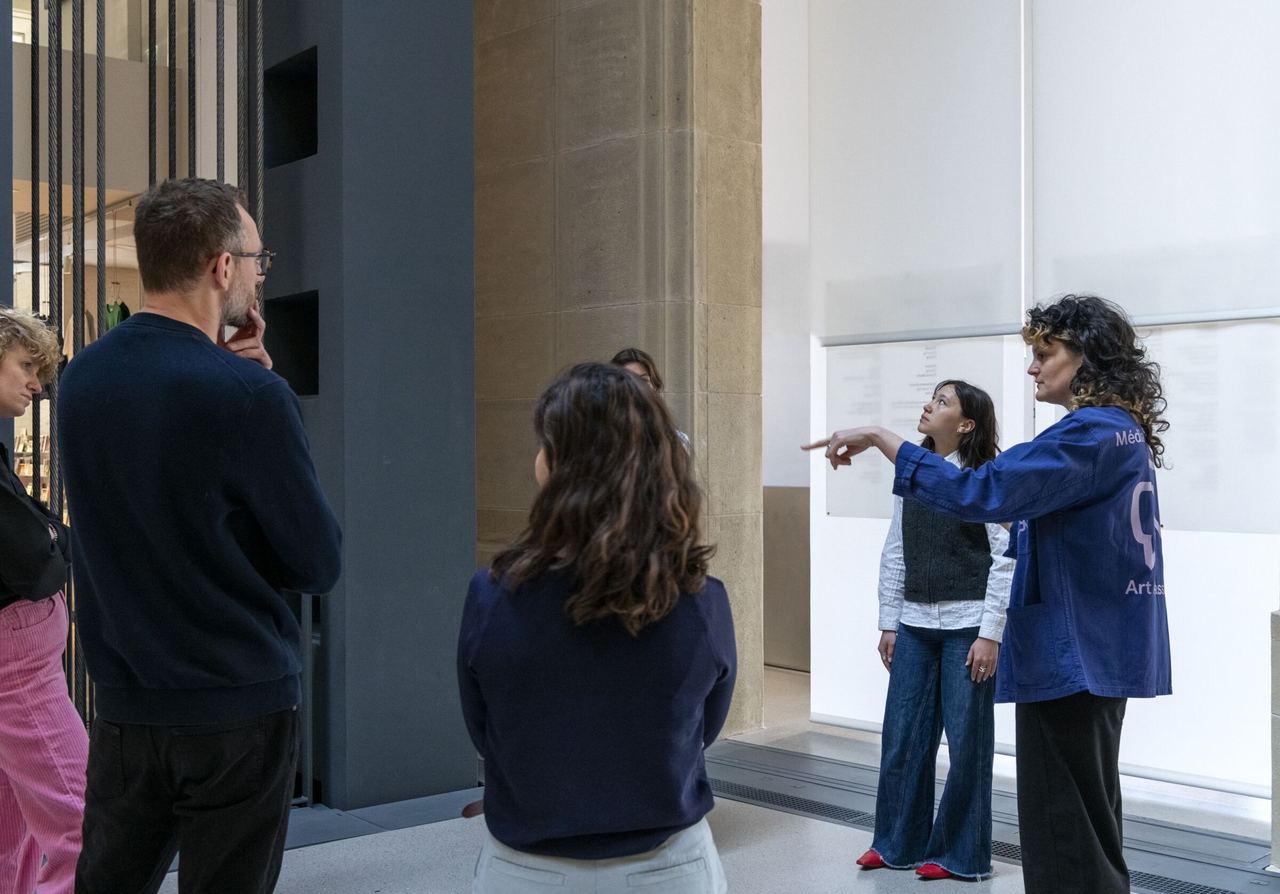
Photo Credit
Image courtesy of © Fondation Cartier pour l’art contemporainWhy it's on our list
- The cloud in the Bois
- A circle in the circle
- Floors that move
Location
The map comes from Google Maps, which sets its own cookies once it loads.
More in depth
 Objects of DesireA Bloody Mary on the rue Daunou, and other Paris inventionsThe IBA Bloody Mary, the bar that claims it, and where Paris drinks well after dark.
 Objects of DesireLess parked than crouched: the electric Jaguar and the new supercarsJaguar’s Type 00 and Type 01, Ferrari’s first electric car and the record-breakers around them.
 Objects of DesireFive days in February: Rétromobile and the car that left in reverseRétromobile 2027, Volvo’s centenary, Bluebird K7 and how to drive into Paris without a fine.