In depth
If you love the Marais: Paris’s neighbourhoods and their international twins
Seven Paris neighbourhoods and their twins in our other guides, from Soho to the Navigli.

Photo Credit
Image courtesy of © Diego Delso · CC BY-SA 4.0 via Wikimedia CommonsSeven Paris neighbourhoods, from the Marais to the Golden Triangle, each paired with the districts in our other city guides that share its mood, its streets and its reasons to linger.
Every great city has a neighbourhood that feels like home the moment you arrive. If yours is the Marais, Saint-Germain or Montmartre, our other guides know where to find its twin abroad: a district with the same mood, the same kind of streets and the same reasons to linger.
Each pairing below comes from our own guides to those cities. Read what the two places share, then follow the links to each guide’s page for the area. No two neighbourhoods are alike, and that is part of the pleasure: the twin is a way into a new city, not a copy of an old one.
The Marais
The Marais spreads across the 3rd and 4th arrondissements: 17th-century mansions around the Place des Vosges and the rue des Francs-Bourgeois, the Musée Picasso and the Carnavalet, and some of the city’s best bars, Little Red Door and Candelaria among them.
Soho, in London, has the same pull after dark. French Huguenot refugees settled there from the 17th century, Italian, Greek and other communities followed with their delis, cafés and restaurants, and its jazz clubs and pubs became legendary.
Malasaña and Chueca, either side of Calle de Fuencarral in Madrid, are a quarter of independent shops, cafés and cocktail bars, from Café Comercial to Museo Chicote. Wander first, then book dinner in Chueca.
Greenwich Village, in New York, is a maze of tree-lined townhouse streets around Washington Square Park, with jazz every night at the Village Vanguard and the Blue Note, and the White Horse Tavern, a writers’ bar for generations.
Saint-Germain-des-Prés
Saint-Germain-des-Prés grew up around its abbey church on the Left Bank. Its literary cafés, the Café de Flore and Les Deux Magots, face Brasserie Lipp on the boulevard Saint-Germain, with Le Procope close by and Le Bon Marché for shopping.

Photo Credit
Image courtesy of © Celette · CC BY-SA 4.0 via Wikimedia CommonsChelsea, in London, was a riverside village of artists and writers: J.M.W. Turner and James McNeill Whistler worked along Cheyne Walk, Thomas Carlyle lived nearby, and in the 1960s and 1970s the King’s Road made it the centre of London fashion.
Chiado, climbing the hill above Lisbon’s Baixa, is the city’s old literary quarter, with its theatres, the Carmo ruins and the Praça Luís de Camões, and pastries at Manteigaria and the Confeitaria Nacional.
Brera, Milan’s old artists’ quarter, has the Pinacoteca and the lanes of the Via Fiori Chiari, full of galleries, shops and small restaurants. Come back in the evening, when the lanes fill for the aperitivo.
Montmartre and Pigalle
Montmartre is the hill of the Sacré-Cœur and the Place du Tertre, and of the painters who lived in its lanes. At its foot, Pigalle has the Moulin Rouge on the boulevard de Clichy and lively bouillons. Arrive by the Abbesses metro and climb.

Photo Credit
Image courtesy of © Pedro Szekely from Los Angeles, USA · CC BY-SA 2.0 via Wikimedia CommonsSanta Teresa sits on a hill above Rio’s Centro: old mansions, artists’ studios and steep lanes, reached by the bonde over the white arches of Lapa. Below, Lapa is quiet by day and Rio’s music quarter at night, as Pigalle is below the butte.
Alfama, Lisbon’s oldest quarter, is a maze of stairways and small squares tumbling from the Castelo de São Jorge to the river, with the Museu do Fado and the miradouros of Santa Luzia and Portas do Sol. Wear flat shoes: the cobbles are steep and polished.
Hampstead, high on London’s northern heights, kept its village character: steep lanes, Georgian houses and old pubs, with the poet John Keats among its residents and the view from Parliament Hill across the Heath.
Canal Saint-Martin and the east
East of the Marais, the 10th and 11th arrondissements run from the locks and footbridges of the Canal Saint-Martin to the Bastille and the Buttes-Chaumont. This is the Paris of its most talked-about bistros, Septime, Clamato and Le Bistrot Paul Bert, with breakfast from Du Pain et des Idées.

Photo Credit
Image courtesy of © JLPC · CC BY-SA 3.0 via Wikimedia CommonsKreuzberg, in Berlin, follows the Landwehr Canal along the Paul-Lincke-Ufer and the Maybachufer, with Markthalle Neun, Curry 36 and star tables such as Tim Raue and Horváth.
The twin is a way into a new city, not a copy of an old one.
The Navigli, in Milan, are the surviving canals of a network that once carried marble for the Duomo. From early evening their banks fill with bars for the aperitivo.
The Jordaan, in Amsterdam, is a grid of small canals and lanes with almshouse courtyards, the Noordermarkt, apple pie at Winkel 43 and the brown cafés ’t Smalle and ’t Papeneiland.
The Latin Quarter and the islands
The Latin Quarter, in the 5th arrondissement, is the old university district around the Sorbonne, facing Notre-Dame, the Sainte-Chapelle and the Île de la Cité across the Seine. The Panthéon and the Jardin du Luxembourg crown its hill, and Shakespeare and Company is the bookshop to browse.

Photo Credit
Image courtesy of © The wub · CC BY-SA 4.0 via Wikimedia CommonsBloomsbury is London’s intellectual quarter, a grid of Georgian squares around the British Museum and the University of London, where Virginia Woolf and the writers and artists of the Bloomsbury Group lived around Gordon Square.
The Gothic Quarter, the oldest part of Barcelona, is built over Roman Barcino: lanes and squares around the cathedral and the Plaça del Rei, with the Roman remains under MUHBA a few minutes from the cathedral’s cloister.
Kala Ghoda, at the southern end of Mumbai’s Fort, gathers museums, galleries, cafés and the Kitab Khana bookshop within a few minutes’ walk. Go on a weekday morning, when the galleries are quiet.
The Louvre and the Palais-Royal
The 1st arrondissement is the old royal heart of Paris: the Louvre and the Tuileries, the arcades of the Palais-Royal, the jewellers of the Place Vendôme and the river at the Pont Neuf, with the Orangerie and the Bourse de Commerce among its museums.

Photo Credit
Image courtesy of © Benh LIEU SONG (Flickr) · CC BY-SA 3.0 via Wikimedia CommonsAmsterdam’s Museumplein gathers the Rijksmuseum, the Van Gogh Museum, the Stedelijk and the Concertgebouw, with the green length of the Vondelpark beside them. Lunch at RIJKS®, then walk it off in the park.
The Upper East Side, in New York, lines Fifth Avenue with the Met, the Frick, the Guggenheim and the Neue Galerie, with Madison Avenue’s shops and Central Park alongside.
Mitte, the historic centre of Berlin, runs from the Brandenburg Gate along Unter den Linden to Museum Island and the Berliner Dom. Walk Unter den Linden early, before the crowds, then cross to Museum Island.
The Champs-Élysées and the Golden Triangle
The 8th arrondissement holds the Champs-Élysées, the Arc de Triomphe and the Golden Triangle between the avenue and the Seine: the couture houses of the avenue Montaigne, palace hotels from the George V to the Crillon, and five three-star tables.

Photo Credit
Image courtesy of © Guillaume Abel Blouet / Jean-Nicolas Huyot / Louis-Robert Goust / Jean-François · Public domain via Wikimedia CommonsMayfair, in London, has Bond Street, Savile Row and Burlington Arcade, and some of the city’s most famous hotels: Claridge’s, The Connaught and The Dorchester.
The Avenida da Liberdade is Lisbon’s grand boulevard, a shaded run of fashion houses and hotels from the Restauradores up to the Marquês de Pombal, with the Four Seasons Hotel Ritz and the Tivoli among its hotels.
Paseo de la Reforma, in Mexico City, runs from Chapultepec to the Centro past the Ángel de la Independencia, lined with towers and grand hotels such as the Four Seasons and the St. Regis; behind it, Colonia Juárez has the cocktail bars.
The Quadrilatero della Moda is Milan’s fashion district, along the Via Montenapoleone and the Via della Spiga, with the Four Seasons, the Armani Hotel and the Grand Hotel et de Milan close at hand.
Our advice: use the twins as a way in. On your first night in a new city, stay or dine in the twin of the Paris neighbourhood you love, then explore outwards from there.
Questions and answers
Which neighbourhoods in other cities are like the Marais?
In our guides, the Marais’s twins are Soho in London, Malasaña & Chueca in Madrid and Greenwich Village in New York. The article explains what each pair shares and links to each guide’s page for the area.
Which neighbourhoods in other cities are like Saint-Germain?
In our guides, Saint-Germain’s twins are Chelsea in London, Chiado in Lisbon and Brera in Milan. The article explains what each pair shares and links to each guide’s page for the area.
Which neighbourhoods in other cities are like Montmartre?
In our guides, Montmartre’s twins are Santa Teresa & Lapa in Rio de Janeiro, Alfama in Lisbon and Hampstead in London. The article explains what each pair shares and links to each guide’s page for the area.
Which neighbourhoods in other cities are like Canal Saint-Martin?
In our guides, Canal Saint-Martin’s twins are Kreuzberg in Berlin, the Navigli in Milan and the Jordaan in Amsterdam. The article explains what each pair shares and links to each guide’s page for the area.
Which neighbourhoods in other cities are like the Latin Quarter?
In our guides, the Latin Quarter’s twins are Bloomsbury in London, the Gothic Quarter in Barcelona and Kala Ghoda in Mumbai. The article explains what each pair shares and links to each guide’s page for the area.
Which neighbourhoods in other cities are like the Louvre?
In our guides, the Louvre’s twins are the Museum Quarter in Amsterdam, the Upper East Side in New York and Mitte in Berlin. The article explains what each pair shares and links to each guide’s page for the area.
Which neighbourhoods in other cities are like the Golden Triangle?
In our guides, the Golden Triangle’s twins are Mayfair in London, the Avenida da Liberdade in Lisbon, Paseo de la Reforma in Mexico City and the Quadrilatero in Milan. The article explains what each pair shares and links to each guide’s page for the area.
Why it's on our list
- The Marais
- Saint-Germain-des-Prés
- Montmartre and Pigalle
- Canal Saint-Martin and the east
- The Latin Quarter and the islands
- The Louvre and the Palais-Royal
- The Champs-Élysées and the Golden Triangle
Location
The map comes from Google Maps, which sets its own cookies once it loads.
More in depth
 The back storyParis on the Seine: how the city grew along its riverThe banks of the Seine, a World Heritage site.
 The back storyFrom the Louvre to the new foundations: Paris, the city of artThe Louvre, the Orsay, Rodin, Picasso and the great foundations.
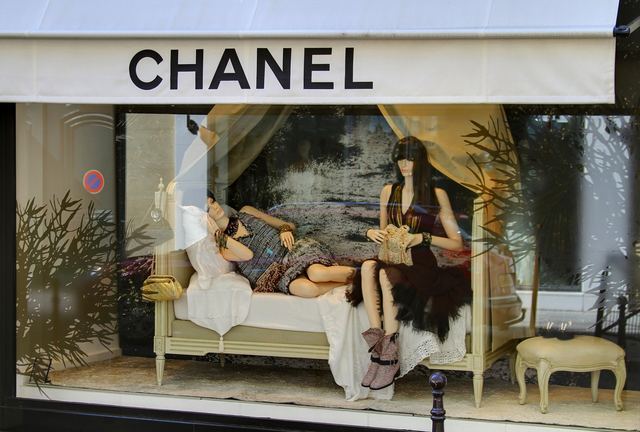 Fashion · DesignersFour Cities, Four Designers: Paris and ChanelHow Gabrielle ‘Coco’ Chanel redefined elegance and made Paris the capital of modern luxury.