Objects of Desire
Concrete, birds and a burning piano hall: how Paris learned to listen
The Philharmonie’s 340,000 birds, the Salle Pleyel’s piano-maker past and a scandal in concrete.
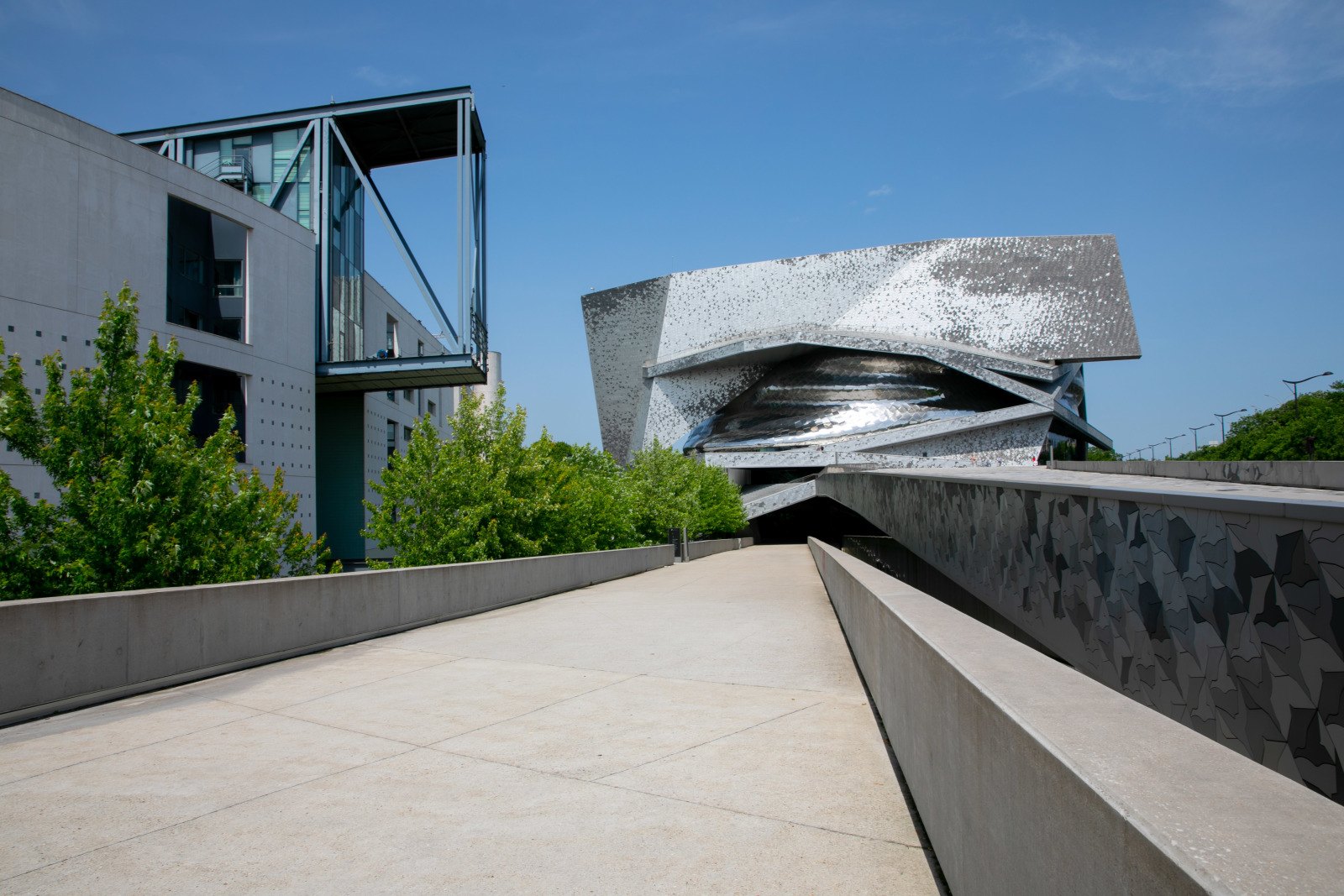
Photo Credit
Image courtesy of © Philharmonie de ParisWhere in Paris does music sound best, and why? Three halls answer in three centuries: a theatre that caused a riot in 1913, a hall built by a piano maker that caught fire a year after opening, and a silver-grey ship of aluminium birds at La Villette. Add a basement club that rebuilt its sound in 2023. Checked against the venues’ own pages in November 2026.
A riot in reinforced concrete
The Théâtre des Champs-Élysées on the avenue Montaigne was the work of a crowd of talents in 1913: Henry Van de Velde, the Perret brothers, the sculptor Antoine Bourdelle and the painter Maurice Denis. The theatre says it was the first in Paris built entirely of reinforced concrete, which proved useful, given what happened next.
Its opening season is remembered for the “scandal” of Le Sacre du Printemps, provoked by Stravinsky’s music and Nijinsky’s choreography. More than a century later the house still gives opera, recitals, orchestral concerts and dance, and its archive keeps plans from 1907 onwards. The building, at least, never flinched.

Photo Credit
Image courtesy of © Anvilaquarius · CC0 via Wikimedia CommonsThe piano maker’s hall
The Salle Pleyel on the rue du Faubourg Saint-Honoré carries the name of a piano maker. Ignace Pleyel founded his firm in 1807, and around 1830 Camille Pleyel’s small salon on the rue Cadet welcomed the great pianists of the day, Frédéric Chopin among them. The great hall itself opened in 1927 with the orchestra of the Société des concerts du Conservatoire.
The hall says critics and Le Corbusier praised its acoustics. Paris had barely finished applauding its new concert hall when the hall caught fire: in 1928 the main auditorium was ravaged, then repaired so quickly that it reopened by the end of the year. Renovations followed in 1981, 1994 and from 2005.
Today Pleyel seats about 2,000, and a movable pit adds roughly 500 more. Its programme has wandered far from the piano stool: this winter brings pop, rock, chanson and jazz, from Keren Ann on 2 December to Stacey Kent on 8 December 2026. Chopin, one suspects, would have asked for the pit.
Birds on the roof
The Philharmonie de Paris was designed and built under the direction of Jean Nouvel. Its Grande salle Pierre Boulez seats 2,400 in symphonic layout, and 3,500 in its contemporary set-up, wrapped round the stage on floating balconies so that the farthest listener is just 32 metres from the conductor.
Paris had barely finished applauding its new concert hall when the hall caught fire.
Acoustically it is a box within a box, with an outer chamber that gives a long reverberation and a Rieger organ built for the symphonic repertoire. Outside, 340,000 aluminium birds tile the grey envelope, and the roof, 37 metres up on the ninth floor of a building 52 metres high, opens as a plateau with a view across the city. Few concert halls dress so well for the walk home.
The building also keeps a space for younger listeners, the Philharmonie for Kids, opened on 29 September 2021. Across town, the Théâtre des Champs-Élysées publishes its history in “Chroniques”, pairing each season’s programme with the house’s past and with Ina audio archives reached through QR codes: a riot, at last, you can listen to in comfort.
Inside, the hall is generous with sound and modest with ceremony: the seats wrap round the orchestra, so the brass section is no longer a rumour from the far end of a shoebox, and you can see the conductor’s face as well as the back of the tailcoat.
Sound below the boulevard
For music played louder and later, the Rex Club sits beneath the Grand Rex on the boulevard Poissonnière. The club dates its story to 1988 and, during its 2023 renovation, updated its multi-diffusion sound system. The programme is on its own website.
Our advice: book the Philharmonie early for the big orchestras and go up to the roof before the concert; look up at the ceiling of the Théâtre des Champs-Élysées before the lights go down; and check the Salle Pleyel’s calendar for jazz, which suits a hall with this much history.
Why it's on our list
- A riot in reinforced concrete
- The piano maker’s hall
- Birds on the roof
Location
The map comes from Google Maps, which sets its own cookies once it loads.
More in depth
 Objects of DesireProjectors, stars and a foundry full of lightThe Grand Rex’s screen, the Atelier des Lumières’ foundry and the Cinémathèque’s Méliès museum.
 Objects of DesireGlass sails, a concrete ring and five floors that moveGehry’s glass sails, Ando’s ring in the Bourse and Nouvel’s moving floors at the Palais-Royal.
 Objects of DesireA Bloody Mary on the rue Daunou, and other Paris inventionsThe IBA Bloody Mary, the bar that claims it, and where Paris drinks well after dark.