The back story
Sank Roo Doe Noo: how Paris learned to drink, the back story
A Manhattan bar shipped to the rue Daunou, the Ritz’s 25 seats and the cabarets of 1889.
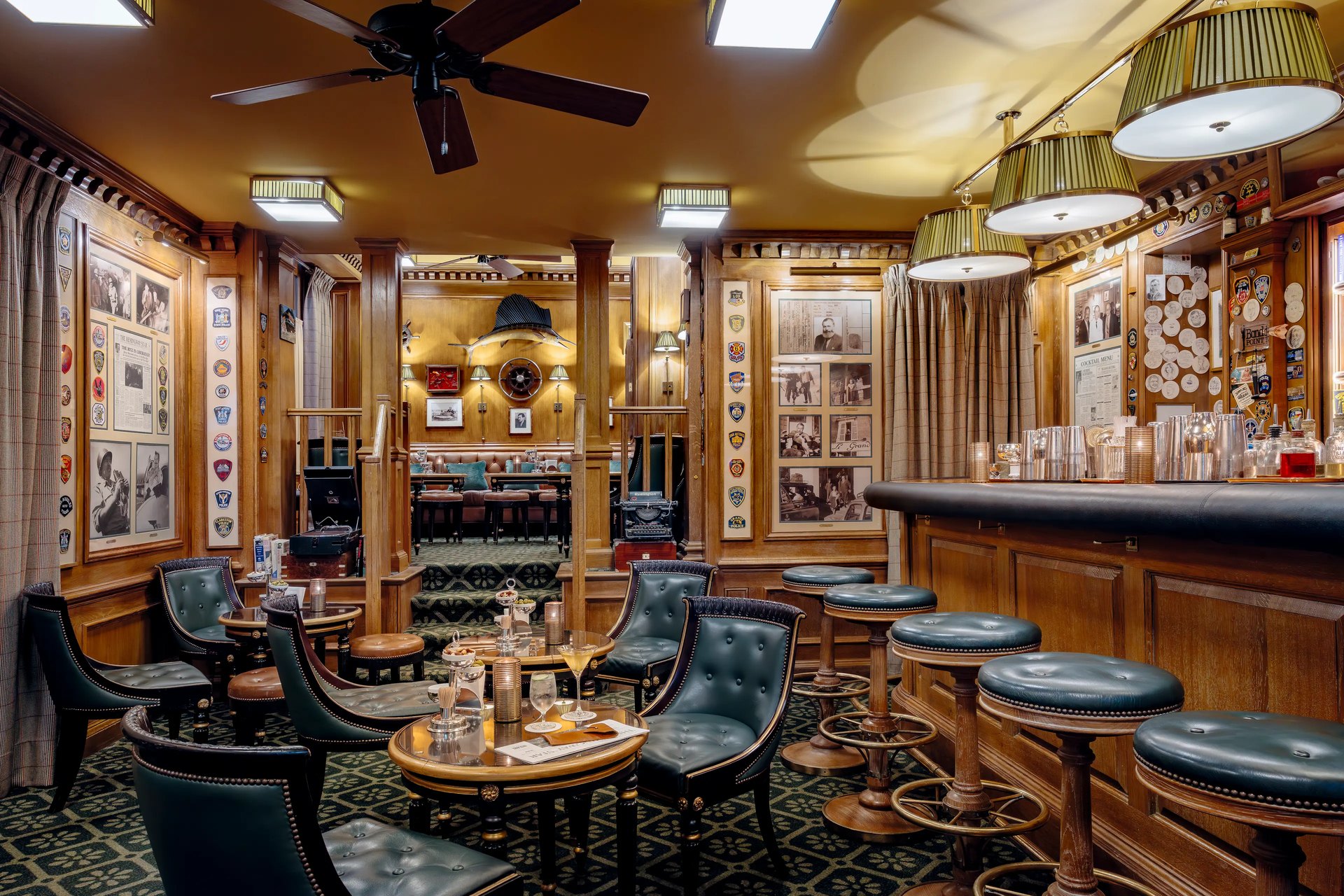
Photo Credit
Image courtesy of © Ritz ParisIn 1911 an American jockey had a Manhattan bar taken apart and rebuilt in Paris, and the city has been perfecting the art of the staged drink ever since: the palace bar where a novelist became a legend, the cabarets that rose in the same year as the Eiffel Tower, and the club beneath a cinema that taught Paris to dance till dawn. Here is the back story behind the city’s glasses.
A bar shipped across the Atlantic
On 26 November 1911, Thanksgiving Day, a Manhattan bar opened in Paris. The American jockey Tod Sloan had it dismantled on Seventh Avenue and reassembled on the rue Daunou, and Harry MacElhone started behind its counter the same year. An old advertisement told English speakers to give the taxi driver the address as “Sank Roo Doe Noo”, which remains the most useful French lesson ever printed.
Harry’s New York Bar claims the Bloody Mary, the Sidecar, the Blue Lagoon and the White Lady among its children. It says George Gershwin composed An American in Paris at its piano, scribbling notes on paper towels that were later burned in the war to light the stove, and that in 1962 Andy MacElhone mixed a James Bond cocktail for the release of Dr. No. Few bars can claim both a symphony and a spy.
The palace bar
The palace hotel turned the cocktail into ceremony. César Ritz opened his hotel at 15 place Vendôme on 1 June 1898, and the Ritz says it was the first hotel in the world with electricity on every floor. One of its bars now carries the name of its most famous regular. The Bar Hemingway has just 25 seats and no music, and feels, by design, like a private club whose members have not yet been introduced.
The hotel tells how Hemingway “liberated” the bar from the Germans in 1944 and marked the occasion with 51 dry martinis in a row; it names F. Scott Fitzgerald, Cole Porter and Gary Cooper among the regulars too. Whether the count was 51 is a matter between the writer and his liver. The panelled room, the mounted sailfish and the photographs on the walls keep the legend in excellent repair.
Feathers and footlights
Gustave Eiffel was busy in 1889. Besides his tower, he rebuilt a Left Bank theatre, the Théâtre Latin of 1803, destroyed by fire in 1870; it reopened as the Paradis Latin on 20 January 1889, its metal columns set into the buried ruins of the Philippe-Auguste city wall. It closed in the 1930s, when nightlife moved to the Right Bank, and reopened on 10 November 1977. It calls itself the oldest cabaret in Paris.
The Moulin Rouge opened that same year, on 6 October 1889, at the foot of Montmartre. Joseph Oller and Charles Zidler billed it as the first palace of women, with an enormous elephant in the garden; Toulouse-Lautrec was a regular, and seventeen of his works were inspired by the place. The French Cancan, says the house, takes its name from how noisy it was. Today’s revue has a troupe of 80 artists and 1,000 costumes.
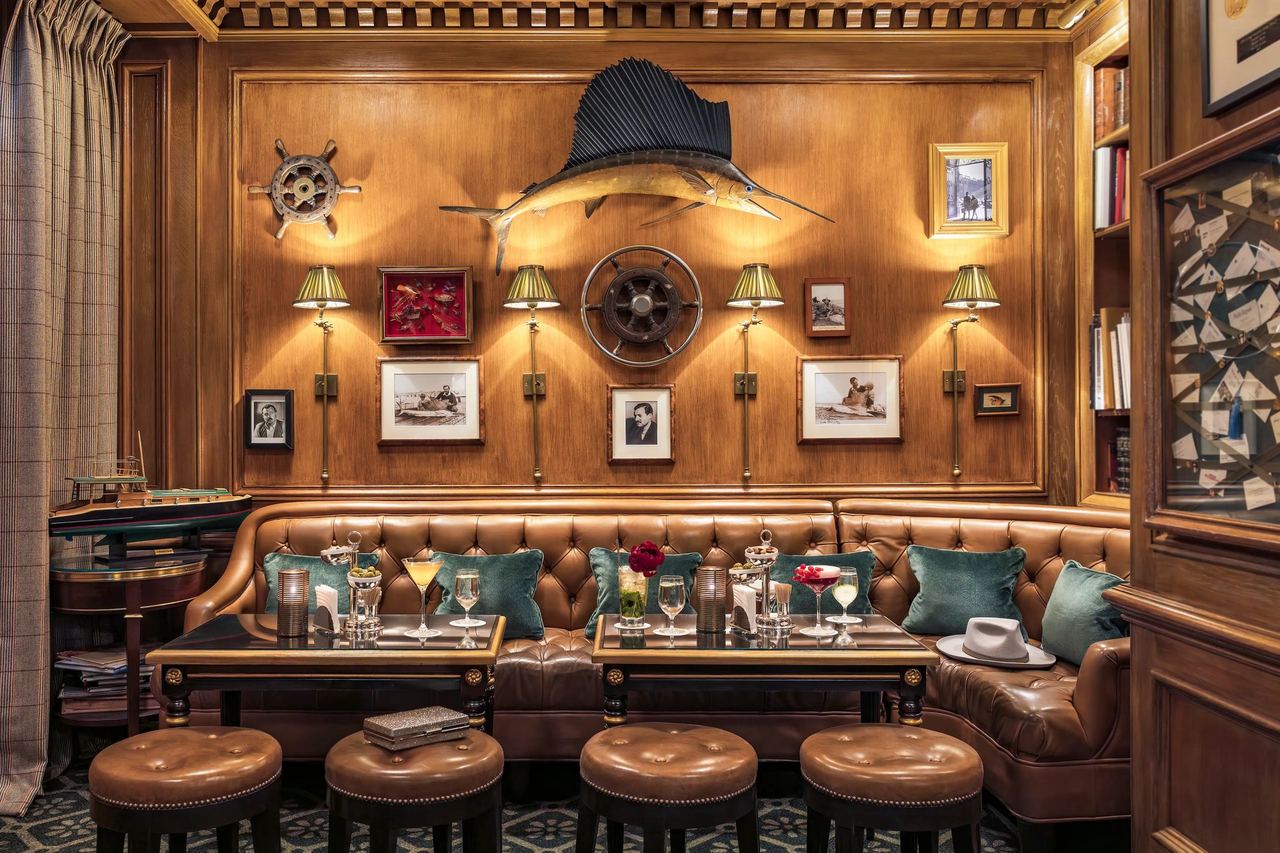
Photo Credit
Image courtesy of © Ritz ParisAlain Bernardin founded the Crazy Horse in 1951 on the avenue George-V, among the fashion houses of the Golden Triangle. From 1960 its dancers were dressed mainly in light, and the house has drawn artists ever since: Salvador Dalí was a regular, Christian Louboutin created numbers for the show FEU in 2012, and in 2006 Dita Von Teese became its first guest star. Few theatres have done so much with so little fabric.
In Paris the drink is rarely the point; it is the ticket to the theatre.
The new guard
The cocktail has since moved east into the Marais. Little Red Door, behind its door at 60 rue Charlot, opens every evening; Candelaria, on the rue de Saintonge, pairs its cocktails with tacos. Le Perchoir took the drink upstairs, onto rooftops from Ménilmontant to the Porte de Versailles, where the view is half the order.
And when the bars close, the Rex Club opens. Beneath the Grand Rex on the boulevard Poissonnière, it has been a pioneer of electronic music since 1988, and in the summer of 2023 it was renovated with care, in its own words, to keep its DNA. What links a jockey’s import to a concrete room full of techno? In Paris the drink is rarely the point; it is the ticket to the theatre.
Our advice: book the cabarets on their own websites, well ahead for weekends; arrive early at the Bar Hemingway, because 25 seats do not wait; take a Sidecar at Harry’s and save the Rex for after midnight. Dress for the Ritz; the Marais is more forgiving.
Why it's on our list
- A bar shipped across the Atlantic
- The palace bar
- Feathers and footlights
- The new guard
Location
The map comes from Google Maps, which sets its own cookies once it loads.
More in depth
 The back storyFrom the Ritz to the Left Bank’s literary hotels: the grand hotels of ParisThe Ritz, the Crillon and the Left Bank: where to stay.
 The back storyParis on the Seine: how the city grew along its riverThe banks of the Seine, a World Heritage site.
 In depthIf you love the Marais: Paris’s neighbourhoods and their international twinsSeven Paris neighbourhoods and their twins in our other guides, from Soho to the Navigli.