The back story
Babas, terraces and a glass of Pouilly: the Paris café, the back story
From a royal pastry chef in 1730 to the Flore’s terrace: how Paris made the café an institution.
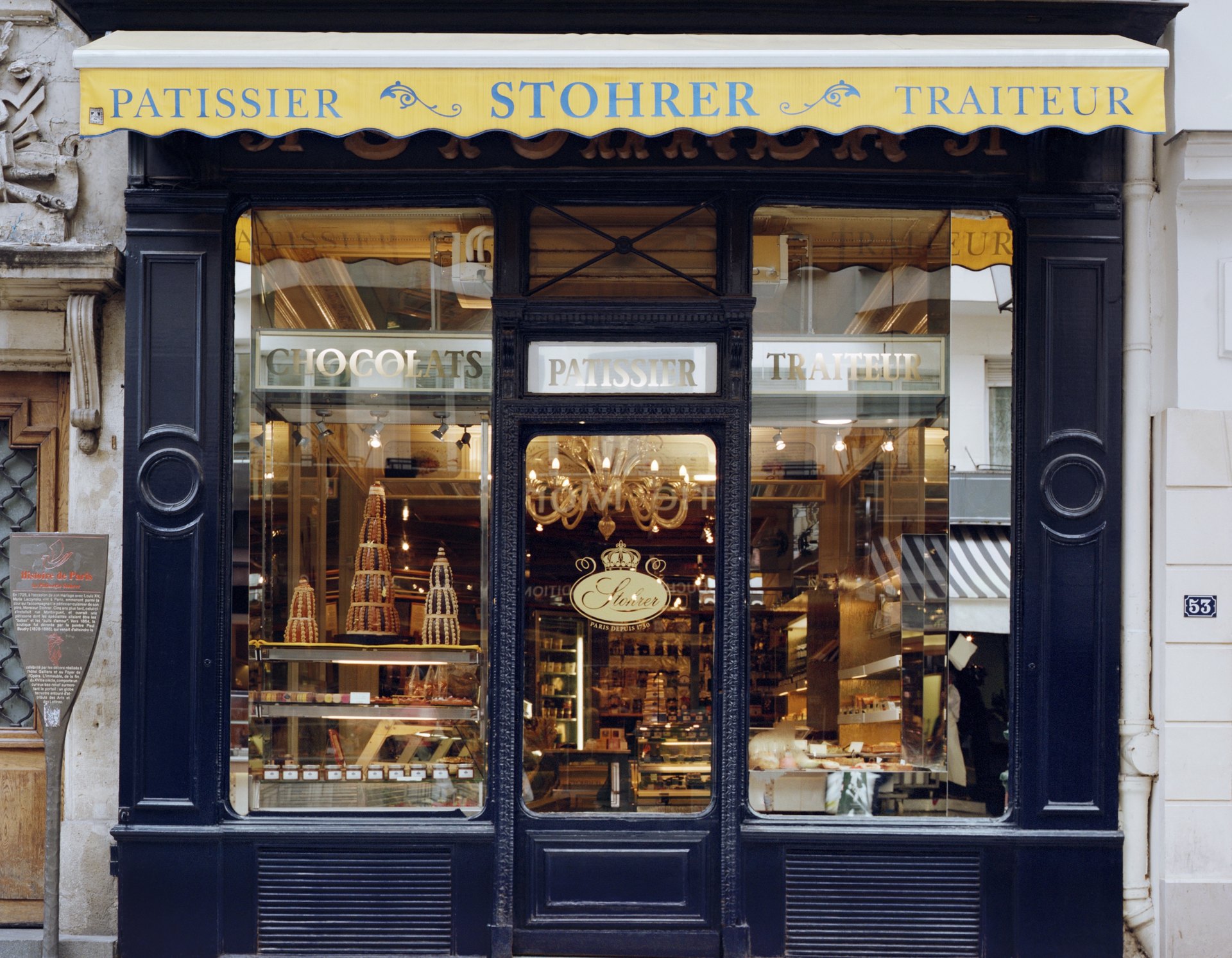
Photo Credit
Image courtesy of © StohrerA Paris café is less a place to drink coffee than a place to be seen not hurrying. The rituals were set over three centuries: a king’s pastry chef on the rue Montorgueil, two literary terraces facing a Romanesque church, tea rooms where angels decorate the ceilings and Chanel kept her own table. Here is how the city turned sitting down into an art, and where the art is still practised.
A pastry chef from a king’s kitchen
The oldest name on this list is older than the café terrace itself. Stohrer has been a Paris pâtisserie since 1730, founded by Nicolas Stohrer, pastry chef to Stanislas Leszczynski, the former King of Poland whose daughter married Louis XV. The house credits him with the baba au rhum, born of a kouglof the king found too dry and soaked to rescue it. Few culinary reputations have been built so profitably on a complaint.
The historic shop is still at 51 rue Montorgueil, and its decor, by a pupil of Paul Baudry, the painter who worked on the Opéra Garnier, is listed as a Monument Historique. Since 2017 the house has belonged to the Dolfi family. The puits d’amour and the religieuse à l’ancienne are still on the counter, and the baba, sensibly, is still soaked.
Two terraces and a church
Les Deux Magots opened in 1884 on the place Saint-Germain-des-Prés, on the site of a novelty shop whose sign gave it its name; two Chinese statues still keep watch from a central pillar. Auguste Boulay bought it in 1914, and the Mathivat family has kept it for four generations. Its roll call runs from Verlaine, Apollinaire and Hemingway to the Surrealists around André Breton and the existentialists around Sartre.
A few steps along the boulevard, the Café de Flore takes its name from a statue of Flora across the boulevard. Apollinaire turned its ground floor into an editorial office for Les Soirées de Paris, and in 1917, the café says, he introduced Philippe Soupault to André Breton at its tables. Paul Boubal bought it in 1939, and through the Occupation Sartre and Simone de Beauvoir worked there every day.
The two cafés do not merely remember literature; they still pay for it. The Prix des Deux Magots lists Raymond Queneau as its first winner, in 1933, for Le Chiendent. The Prix de Flore, founded in 1994, is awarded each November, and besides a cheque its winner receives a glass engraved with their name, for a daily Pouilly-Fumé at the café for a year. It is the only literary prize that arrives with its own hangover.
The actress Simone Signoret, in her memoir, claimed to have been born at the Flore in March 1941: a birthplace no maternity ward could match. The Deux Magots, for its part, says Simone de Beauvoir wrote Les Mandarins at its tables. Why did these terraces matter so much? Because a café table cost a writer the price of a drink, and a room of one’s own cost rather more.

Photo Credit
Image courtesy of © Celette · CC BY-SA 4.0 via Wikimedia CommonsThe salon de thé
The tea room was a Right Bank idea. Louis Ernest Ladurée opened a bakery on the rue Royale in 1862; after a fire in 1871 it was rebuilt as a pâtisserie, decorated by the poster artist Jules Chéret with winged, smiling angels. His wife, Jeanne Souchard, then joined pastry shop and café in one room, creating one of the first tea rooms in Paris, and a cousin, Pierre Desfontaines, set two macaron shells around a creamy filling.
Few culinary reputations have been built so profitably on a complaint.
Angelina followed in 1903, when the Austrian confectioner Anton Rumpelmayer and his son René opened at 226 rue de Rivoli, naming the house after Anton’s daughter-in-law. The Dutch architect Edouard-Jean Niermans designed the Belle Époque rooms. Proust came, and Coco Chanel walked over from the rue Cambon and insisted on her table. The Mont-Blanc and the old-style hot chocolate remain, the latter thick enough to make the spoon feel useful.
Bread, then beans
Breakfast needs bread. Pierre Poilâne founded his bakery at 8 rue du Cherche-Midi in 1932, and three generations, Pierre, Lionel and Apollonia, have run it since; every loaf is still raised on natural sourdough and baked in a wood-fired oven fed with dry hardwood offcuts. By the Canal Saint-Martin, Christophe Vasseur founded Du Pain et des Idées in 2002 inside a listed former bakery, its painted ceilings intact.
The newest ritual is the bean itself. Coutume opened its first Paris coffee shop in 2011 under its founder, Tom Clark, and since 2022 has roasted in Romainville, some 65 tonnes a year. Pierre Hermé, whose boutiques include one on the rue Bonaparte, carries Desfontaines’ invention forward: the Ispahan pairs rose, raspberry and lychee. A city that long drank coffee as an excuse to sit down now asks where it was grown.
Our advice: take breakfast early on a Saint-Germain terrace, with a viennoiserie and the newspaper; walk to the rue du Cherche-Midi for a Poilâne loaf; keep Angelina for a wet afternoon and Stohrer for the walk home. Sit outside if you can: in Paris the terrace is the point, and nobody will rush you.
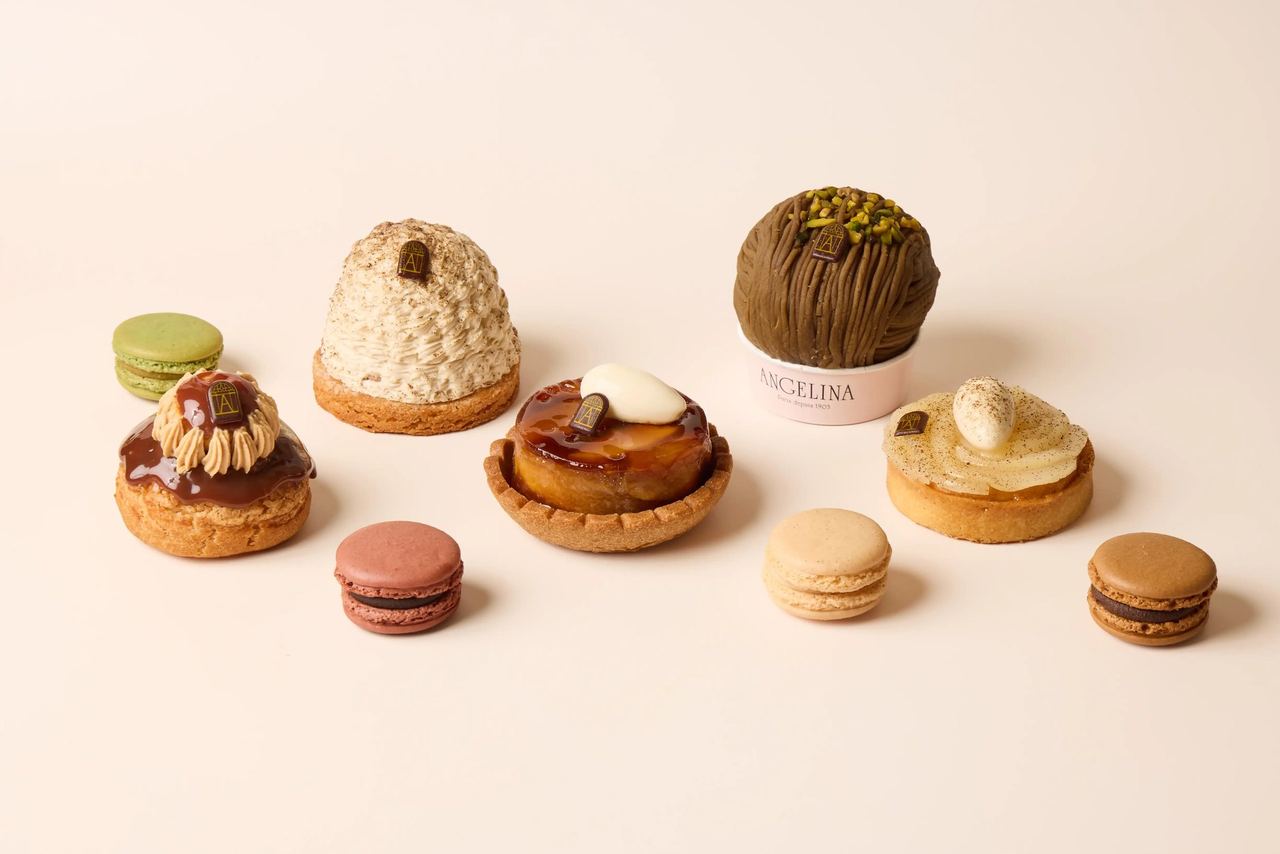
Photo Credit
Image courtesy of © AngelinaWhy it's on our list
- A pastry chef from a king’s kitchen
- Two terraces and a church
- The salon de thé
- Bread, then beans
Location
The map comes from Google Maps, which sets its own cookies once it loads.
More in depth
 The back storySank Roo Doe Noo: how Paris learned to drink, the back storyA Manhattan bar shipped to the rue Daunou, the Ritz’s 25 seats and the cabarets of 1889.
 The back storyFrom the Ritz to the Left Bank’s literary hotels: the grand hotels of ParisThe Ritz, the Crillon and the Left Bank: where to stay.
 The back storyParis on the Seine: how the city grew along its riverThe banks of the Seine, a World Heritage site.